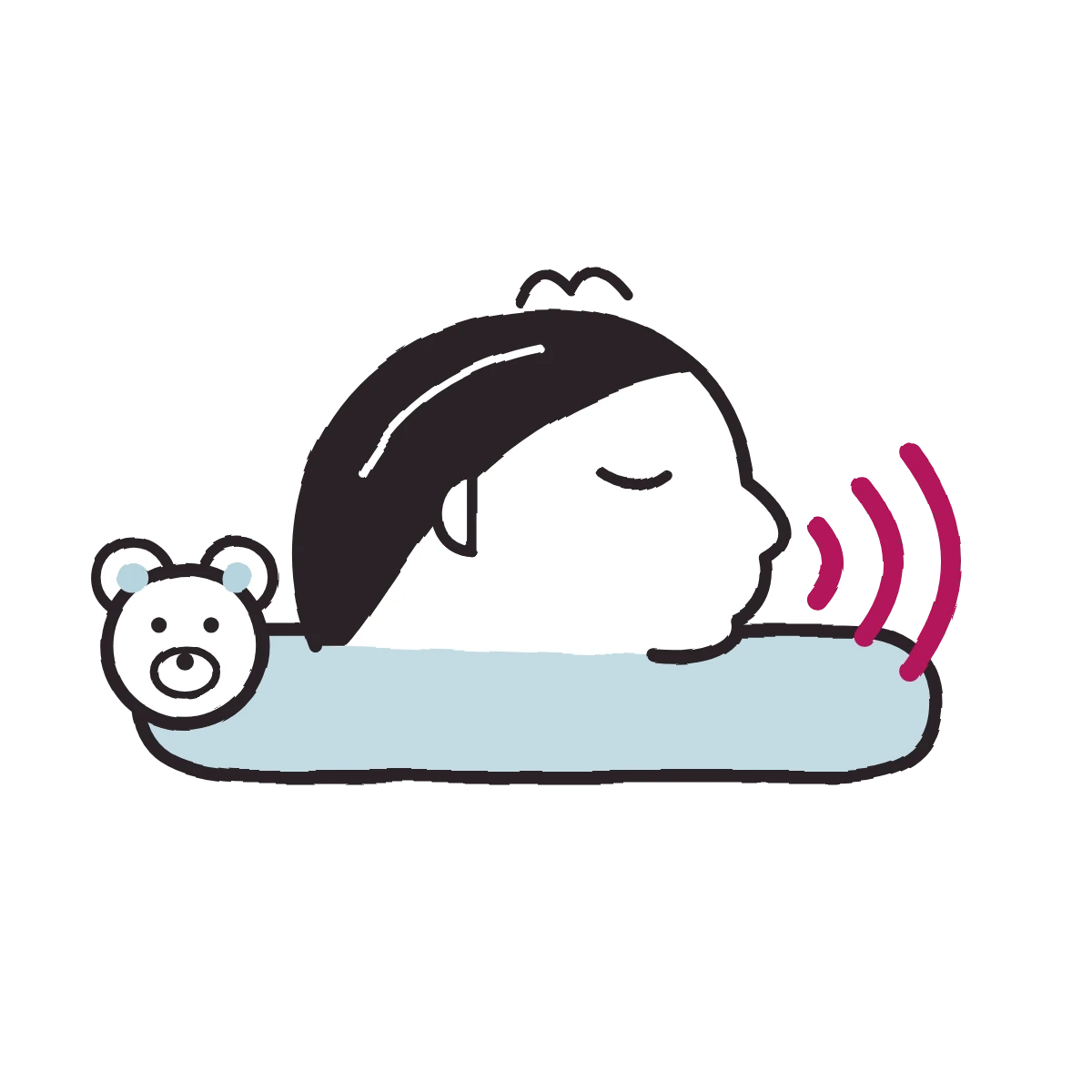

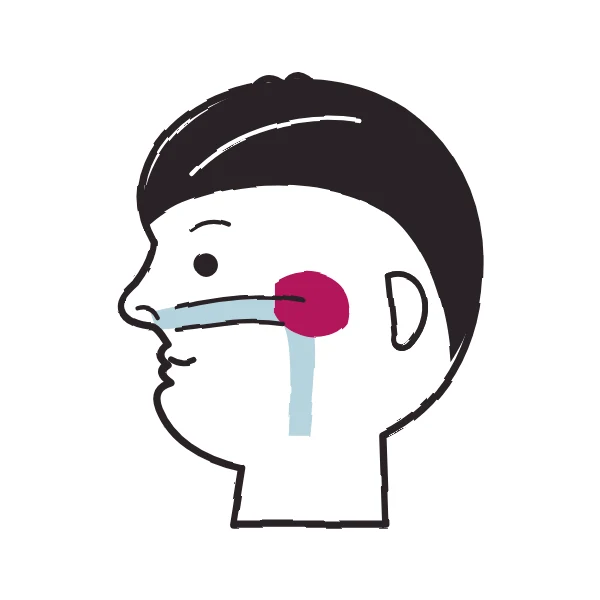
Children often snore during an infection. Regular snoring over weeks, breathing pauses or mouth breathing at night are a reason for an ENT examination. The most common cause in childhood is enlarged adenoids (polyps) and tonsils.
Step 1
Is snoring in children normal?
Occasional snoring with a blocked nose, for example during a cold, is common and settles with the infection. It becomes notable when a child snores almost every night, also without an infection, and breathes through the mouth while doing so.
Regular snoring does not automatically mean sleep apnoea, but it should be examined, because persistently obstructed breathing during sleep can be behind it.
Step 2
How do I recognise sleep apnoea in my child?
Signs include observed breathing pauses, laboured or gasping breathing, very restless sleep with unusual sleeping positions and bedwetting that returns. During the day, tiredness, irritability or difficulty concentrating may stand out.
Whether snoring is caused by sleep apnoea cannot be said reliably just by looking; the size of the tonsils is not a reliable sign either. Your observations at night are therefore important, for example breathing pauses, restless sleep or mouth breathing. A sleep study in a sleep laboratory is useful above all in children under two, with marked overweight, with certain underlying conditions, for example Down syndrome, facial malformations or neuromuscular diseases, or when findings are unclear; a referral is arranged for this.
- Observed breathing pauses or gasping during sleep
- Mouth breathing, laboured breathing
- Restless sleep, frequent waking
- Daytime tiredness, irritability or poor concentration
Step 3
How is childhood snoring assessed and treated?
In the practice the nose, nasopharynx, throat and tonsils are assessed, endoscopically if needed, along with the ears using tympanometry and a hearing test. Allergy and a chronically blocked nose are taken into account.
Treatment follows the cause: treating nasal breathing and allergy, monitoring the course, or — with clearly enlarged adenoids (polyps) and tonsils — discussing surgery through a hospital.
Frequently asked questions
When should snoring be seen by an ENT specialist?
When a child snores regularly for several weeks, also outside infections, or when breathing pauses are observed. Daytime signs such as marked tiredness are an additional reason.
Is a sleep study done in the practice?
No. The practice carries out the ENT assessment; if a sleep study is needed, it takes place in a sleep medicine centre after referral.
Does surgery help with snoring?
If enlarged adenoids (polyps) or tonsils are the cause, surgery is a common treatment route. No particular outcome can be promised.
Sharing helps.
Do you know someone with similar symptoms? This page may help them.